
Design Rate
Order lines/hour with SKU mix
Boundary: peak factor, zero-pressure accumulation depth and exception recovery must share one record.
Open rate worksheet →Map receiving, accumulation, divert logic and shipping against load units, SKU velocity, peak windows and WMS/WCS/PLC ownership. Fives keeps evaluation attached to the material-flow path your distribution center actually runs—so modules are compared with the same acceptance gates.
Order lines/hour with SKU mix
Boundary: peak factor, zero-pressure accumulation depth and exception recovery must share one record.
Open rate worksheet →Factory acceptance samples
Boundary: divert accuracy, merge logic and alarm ownership tested before shipment, not only after install.
Review FAT framing →Site acceptance under live loads
Boundary: witness roles, fallback lanes and retest triggers when recipes change after go-live.
Review SAT gates →Access · diagnostics · spares
Boundary: mean time to repair paths and critical spare staging stated before operational handover.
Discuss coverage →Product conversations stay attached to divert accuracy, zero-pressure accumulation, palletizing pattern rules and the control layer that must own each handshake.

Belt and roller sections sized to load units, merge logic and buffer occupancy—not isolated meters-per-minute claims.

Divert accuracy, recirculation limits and induction balance reviewed against order-line structure and cutoff windows.

Palletizing pattern recipes, layer stability and PLC permissive states stay paired with outbound wave timing.
Carton, tote or pallet dimensions, weight bands and overhang rules freeze before module selection.
Design rate, peak factor and recovery time after jam or recirculation stay in one record.
WMS, WCS, PLC and sorter handshake states name who may authorize restart after a stop.
Zero-pressure zones and buffer occupancy limits pair with induction balance assumptions.
Roller, sensor and sorter access paths appear before go-live, with critical spare lists.
Acceptance cases attach to divert samples, alarm ownership and live load assumptions.
Compare SKU depth, peak factor and load-unit mix before locking conveyor architecture. Planning ranges are scaffolds, not certified throughput claims.

High SKU velocity, short cutoff windows and light polybag handling that stress divert accuracy and recirculation caps.
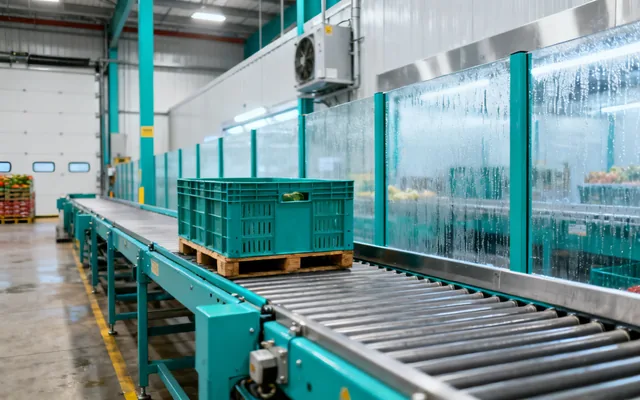
Store-order waves, tote lid integrity and temperature-adjacent buffering with named WCS release owners.
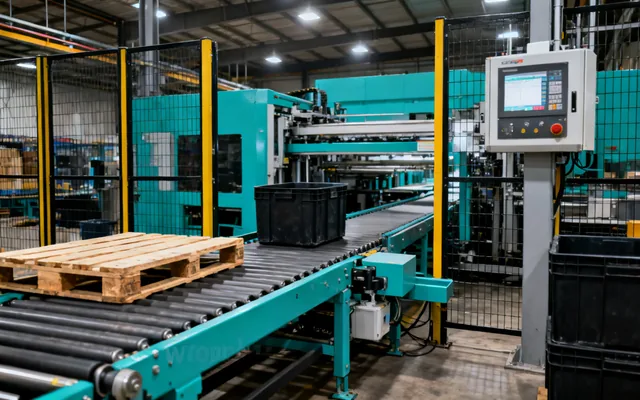
Takt-aligned release, isolatable spur lanes and retest triggers when palletizing pattern recipes change after SAT.
Share load units, peak windows, interface owners and exception patterns. Fives responds with a structured evaluation path—not a brochure dump.